
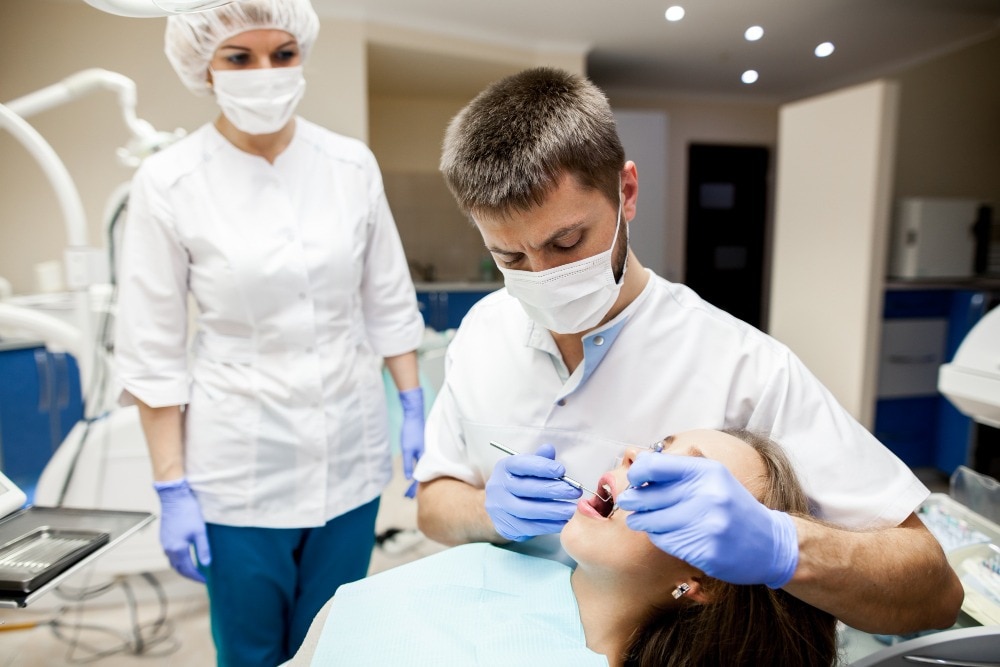
Pain alone does not determine whether a tooth needs root canal treatment. You need to know how the dentist tests the tooth, disinfects and fills its canals, protects it afterward, and decides whether another treatment offers a better prognosis.
Key takeaways
- Pain alone does not confirm that you need a root canal.
- The dentist uses tests and X-rays to assess the tooth and infection.
- Canals are cleaned, measured and sealed before the tooth is restored.
- Arrange prompt review for persistent pain, swelling or a loose filling.
How does a dentist confirm that root canal treatment is the right option?
The practical answer to what does a dentist include in root canal treatment in Chinchwad is a diagnostic assessment before treatment. Pain alone cannot responsibly justify root canal therapy.
The dentist reviews the pain pattern, hot or cold sensitivity, swelling, medical history and previous dental work, then performs percussion, palpation, bite testing, periodontal probing and pulp-sensibility tests.
| Condition | Typical clues | Treatment implication |
|---|---|---|
| Reversible inflammation | Brief hot or cold pain that stops quickly | Preserve the pulp and remove the cause |
| Irreversible inflammation | Lingering thermal pain or spontaneous pain | Root canal treatment may be appropriate |
| Non-vital or necrotic pulp | No sensibility response, possible tenderness or bone change | Root canal treatment if the tooth is restorable |
| Crack, gum abscess or referred pain | Pain on biting, localized gum findings or a healthy tooth that feels painful | Treat the actual source, not automatically the suspected tooth |
Periapical dental X-rays show root number, canal shape and bone changes. Angled images can reveal anatomy hidden on a straight view. A limited-field CBCT scan belongs in selected complex cases, because its radiation exposure and cost need justification; it is not routine for every root canal treatment Chinchwad case.
The dentist also checks whether enough healthy tooth structure remains for a restoration. An unrestorable vertical root fracture or severe loss of supporting bone makes root canal treatment unsuitable, even when the symptoms sound typical.
What happens during the first root canal appointment?
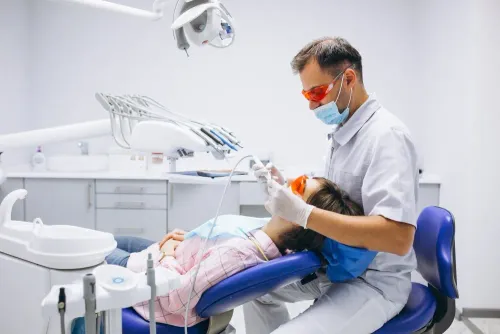
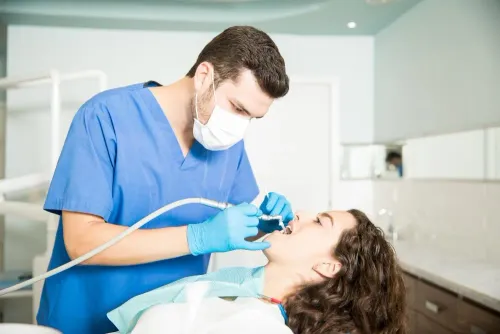
Once the diagnosis is confirmed, the first visit starts with comfort and control. A dentist Chinchwad patients consult should explain the steps before numbing the tooth and beginning treatment.
1. The dentist administers local anaesthesia and checks that the tooth is fully numb. You may feel pressure or vibration, but report any sharp pain immediately.
2. The dentist places a rubber dam around the tooth. This isolation keeps saliva and bacteria out of the canals, shields you from irrigants, and prevents small endodontic files from being swallowed or aspirated. Treatment should not continue if safe isolation is impossible.
3. The dentist makes a small access opening through the crown, locates each canal entrance and removes infected or inflamed pulp tissue from the chamber and canals. If the tooth is difficult to numb or has unusual anatomy, that problem must be managed before cleaning proceeds.
4. If drainage, swelling or an open canal prevents complete cleaning and sealing, the dentist may place intracanal medication and a temporary filling. Forcing a one-visit finish can compromise the seal and safety.
The number of visits depends on infection, anatomy and drainage, not on a promise attached to root canal treatment Chinchwad advertising. Before leaving, confirm whether the tooth has been sealed temporarily or permanently and what care it needs until the next appointment.
How are root canals cleaned, measured and filled?
The dentist establishes a reproducible working length with an electronic apex locator, confirming it with dental radiographs when needed, before shaping the canals. This prevents instruments and filling material from extending beyond the root.
- Use hand files or nickel-titanium rotary or reciprocating files to create a controlled canal shape.
- Irrigate repeatedly because mechanical shaping alone cannot remove all bacteria and infected tissue.
- Use sodium hypochlorite to dissolve organic tissue and kill microbes, while controlling its flow carefully.
- Never force irrigant through an open apex, perforation or other defect; extrusion can cause severe pain, swelling and tissue injury.
- Dry the canals, then obturate them with gutta-percha and sealer.
Obturation seals the prepared space; it does not compensate for incomplete disinfection. A dentist may finish root canal treatment in one appointment when the anatomy, symptoms, drainage and restoration plan permit it. Multiple visits are more suitable for persistent drainage, infection, difficult anatomy or a need for intracanal medication.
Between visits, a temporary filling seals the tooth. Do not chew hard or sticky food on it, because dislodging the temporary seal can allow saliva and bacteria back into the canals.
When comparing an advanced root canal Chinchwad clinic or root canal treatment Chinchwad provider, ask which technique is being used; equipment names alone do not prove treatment quality.
What must happen after the canals are filled?
After obturation, the dentist checks your bite and adjusts any high contact so the treated tooth does not take excessive chewing force. A root canal treatment in Chinchwad should then include a bonded permanent filling or a plan for a stronger rebuild; a temporary filling is not a final restoration.
A badly damaged back tooth often needs cuspal protection with an onlay or crown. The choice depends on remaining walls, cracks, chewing load, appearance and whether the restoration can create a durable coronal seal.
| Option | What it means | When it applies |
|---|---|---|
| Simple filling | Removes decay and seals the tooth | Decay has not irreversibly damaged the pulp |
| Pulp capping | Covers a limited pulp exposure while the pulp remains vital | Selected teeth with limited exposure, not necrosis or apical infection |
| Extraction and implant | Removes the tooth, then replaces it with an implant | A vertical root fracture or a tooth that cannot be restored; an implant does not replace a restorable natural tooth |
| Retreatment | Removes previous filling material and disinfects the canals again | A restorable treated tooth has persistent disease, not every post-treatment ache |
Antibiotics are not routine for localized dental pain. Fever, malaise or spreading infection needs prompt clinical assessment, because drainage and definitive dental treatment address the source. Persistent root canal treatment problems need reassessment with new imaging and restoration review before anyone repeats treatment.
How should you assess advanced treatment and root canal problems?
Mild tenderness for a few days can reflect inflammation around the root, not treatment failure. Increasing swelling, fever, difficulty swallowing or breathing, or pain that does not settle requires prompt review.
Persistent disease is a root canal treatment problem that needs diagnosis, not an automatic repeat procedure. Possible causes include:
- A missed canal or inadequate disinfection
- Incomplete filling or leakage at the crown
- An untreated crack, perforation or separated instrument
- A root fracture
Reassessment includes new dental imaging and a review of the filling, crown or other restoration. The treatment choice depends on the findings.
| Option | What it involves | When it applies |
|---|---|---|
| Reassessment | Imaging and restoration review | Any persistent symptom |
| Nonsurgical retreatment | Removes old filling material and addresses missed anatomy | The tooth is restorable and canals are reachable |
| Apical surgery | Treats infection around the root tip from the surgical end | The apical area cannot be reached adequately |
| Extraction | Removes the tooth | A root fracture or severe damage prevents predictable restoration |
Ask any dentist describing an Advanced Root Canal Chinchwad service to name the actual technique: magnification, an apex locator, nickel-titanium files, ultrasonic irrigation, selected CBCT or microsurgery.
Dr. Gaikwad's Dental Clinic is a local option if you want a dentist Chinchwad patients can ask to explain the diagnosis, visit plan, final restoration and prognosis rather than an equipment label.
- Is the tooth restorable?
- How many visits are planned?
- What temporary seal and final restoration will be used?
Related service
Advanced Root Canal Advanced Root Canal A root canal is a treatment used to repair and save a tooth that is badly decayed or becomes infected. |
Frequently asked questions
How does a dentist confirm that root canal treatment is the right option?
The dentist combines your symptoms, tooth examination, pulp sensitivity tests and dental X-rays. Pain alone does not justify root canal treatment; the assessment must show damaged or infected pulp and a tooth that can be restored.
What happens during the first root canal appointment?
The dentist reviews your symptoms, examines the tooth, takes any needed X-rays, explains the diagnosis and treatment plan, and uses local anaesthetic before accessing the infected pulp.
How are root canals cleaned, measured and filled?
The dentist creates access to the canals, removes infected pulp, cleans and shapes each canal with small instruments and disinfecting irrigation, determines working length, then fills and seals the canals with root-filling material.
What must happen after the canals are filled?
The tooth needs a durable final restoration, such as a filling or crown, to seal it and protect it from fracture. Follow the dentist’s eating and care instructions and return for the planned restoration.
How should you assess advanced treatment and root canal problems?
Ask why advanced treatment is needed, whether the tooth can be restored, and what alternatives exist. Contact a dentist promptly for increasing pain, swelling, fever, a bad taste, or a loose or broken restoration after treatment.